

About this research and writing project:
The challenge: Theme park attractions are typically credited to corporate entities or famous male designers, erasing the individual artists who created the specific details that make experiences memorable. Joyce Carlson spent decades at Disney as the creative force behind “it’s a small world” and other iconic attractions, but remained largely unknown to the general public even after 50 years with the company. By 2022, her contributions risked being forgotten entirely, particularly the labor conditions she navigated as a woman in mid-century design work.
My approach: I reconstructed Carlson’s career arc from wartime mail clerk to lead Imagineer, using archival Sentinel coverage from her 1994 milestone celebration and Disney historian Jim Korkis’ interviews. I documented both her artistic process (scouring Los Angeles discount stores for plastic flowers and costume jewelry to dress Styrofoam models) and the institutional barriers she faced (the company flying male executives to the 1964 World’s Fair while initially excluding the women who actually designed the attraction). The piece required balancing celebration of her legacy with honest documentation of workplace inequality, and preserving specific details (the $300 spending money, her habit of sneaking backstage to watch children experience her work) that humanized her beyond corporate mythology.
The impact: Published in the Orlando Sentinel, the article preserved the story of a foundational creative voice at Disney before institutional memory faded completely. It gave Carlson proper credit for work millions of people have experienced without knowing her name, and documented the reality of being a pioneering woman in theme park design during an era when women’s creative labor was routinely minimized.
Originally published in the Orlando Sentinel on March 14, 2022
Joyce Carlson started out fetching coffee and delivering mail and art supplies at Walt Disney Studios in Burbank, California during World War II.
The young Midwesterner would end up staying with the Walt Disney Co. for the rest of her career, becoming best known as a major artistic imagination behind the “it’s a small world” attractions in Orlando and elsewhere.
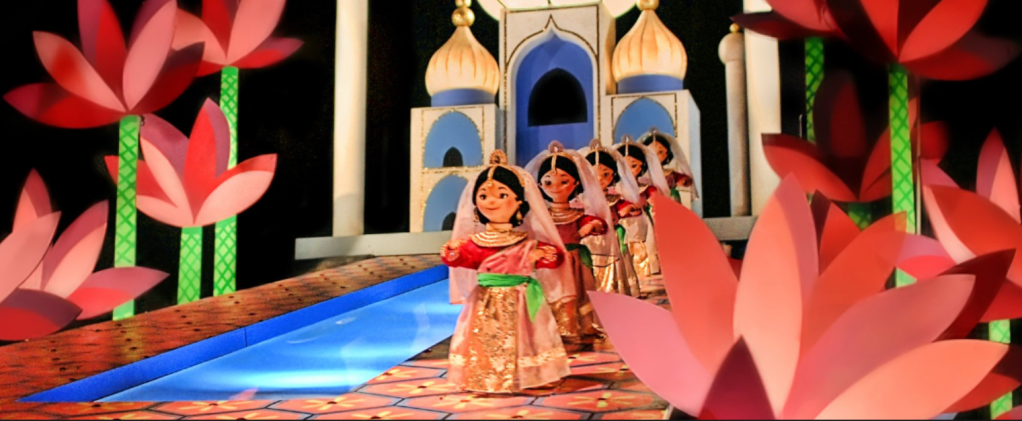
Without Carlson, the cheerful color-soaked land of dancing dolls would never have been the same.
Before getting into attractions design for Disney, Carlson had been an inker for more than 15 years, with work on films including “The Three Caballeros,” “Victory Through Air Power,” “Cinderella,” “Peter Pan” and “Sleeping Beauty.”
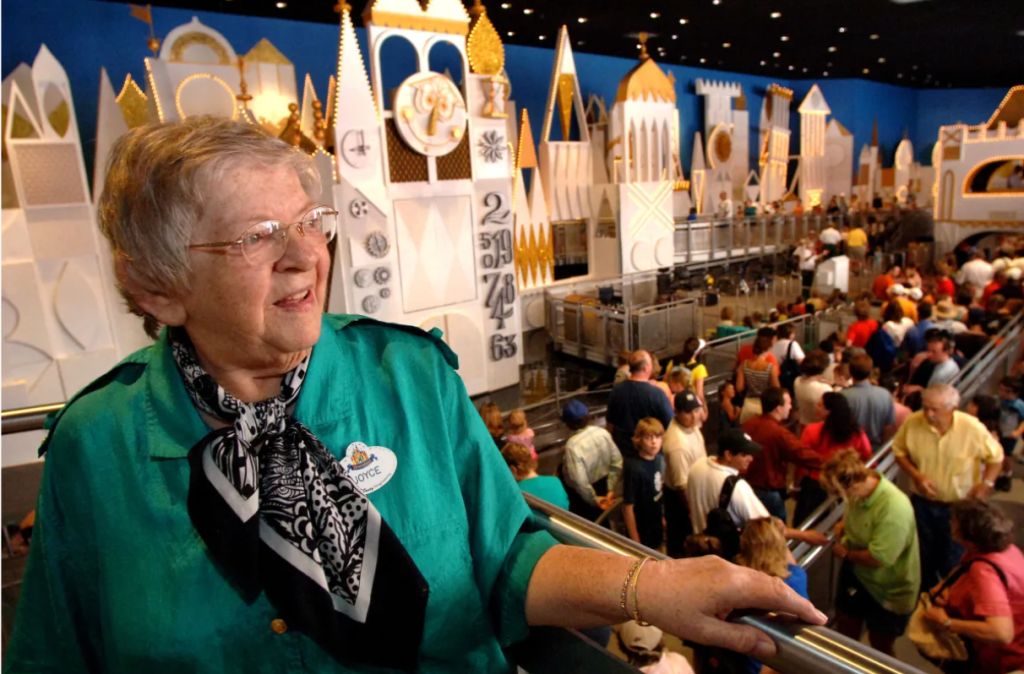
Later, she had a hand in Walt Disney’s Carousel of Progress, America Sings, The Haunted Mansion and countless other Disney projects.
But she’s best known for her role in creating the iconic boat ride through a cool, dark universe where only unity and innocence exist.
Twenty-eight years ago on March 12, 1994, a front-page Orlando Sentinel article covered a celebration honoring the Imagineer’s 50 years with Disney, the first female employee to reach the milestone.
At the time, Carlson was not extremely well known to the general public, even though she was an icon to theme-park insiders.
Her work on “small world” began in the 1960s, when she was part of a small team to set up the models for the attraction at the New York World’s Fair.
She and her coworkers used Styrofoam to create the models, and then festooned them with found items like plastic flowers, costume jewelry and glitter, she told Disney historian Jim Korkis in an interview decades later.
“I went all over Los Angeles to places to find these things cheaply at places similar to a Pic’N’Save,” Carlson told Korkis. “It was a shock when I came out to Florida because they didn’t have all these places and I couldn’t find the things I needed.”
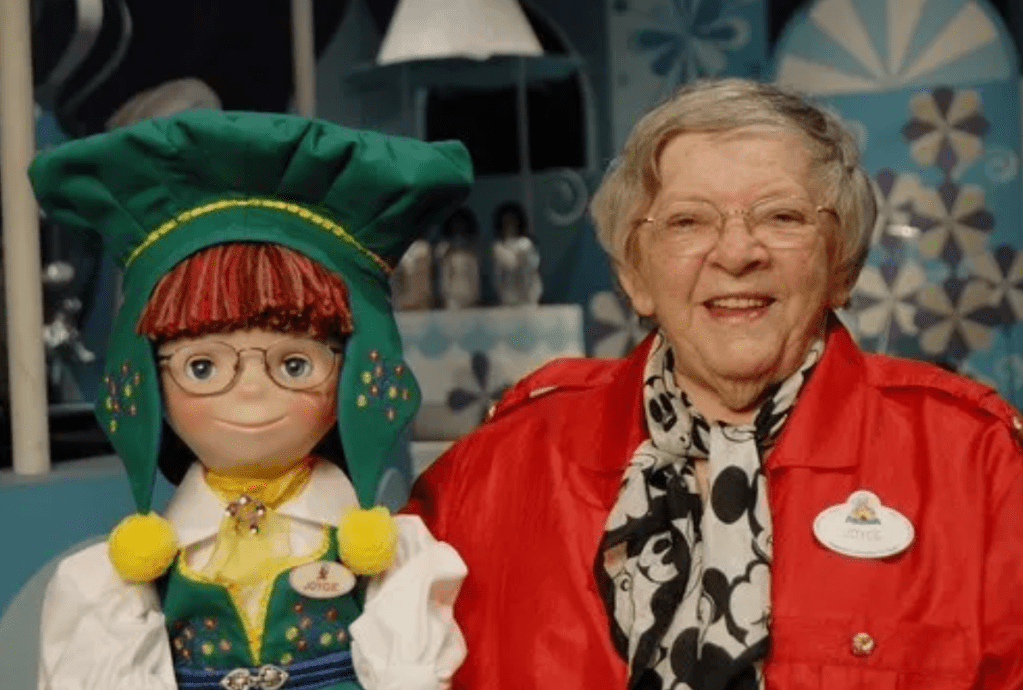
Back in those days, the company paid to send top male executives to New York for the 1964 World’s Fair but never thought to invite Carlson and other lower-level coworkers whose brains were actually the magic behind the creation.
It was only after Carlson’s colleague Mary Blair complained to Walt Disney himself that a plane ticket was purchased for Carlson and others, according to Korkis.
They were put up near Shea Stadium and given $300 each in spending money — the equivalent of about $2,700 today.
“Boy, that was quite a bit in 1964!” Carlson told Korkis. “I even had money when I came back. Oh, my, we had a lot of fun.”
Carlson later played a key role in bringing “small world” to Disneyland and then to the Magic Kingdom, followed by Tokyo Disneyland.
She retired from full-time employment in 2000, but stayed on at Disney part-time for another six years, into her early 80s.
She told the Sentinel in an interview that she liked to sneak backstage at Walt Disney World and watch children take in the “small world” she had birthed.
“You watch them going through, and they’re just all eyes,” she said.
Carlson died of cancer in her Orlando home in 2008 at age 84.
Read this article on OrlandoSentinel.com
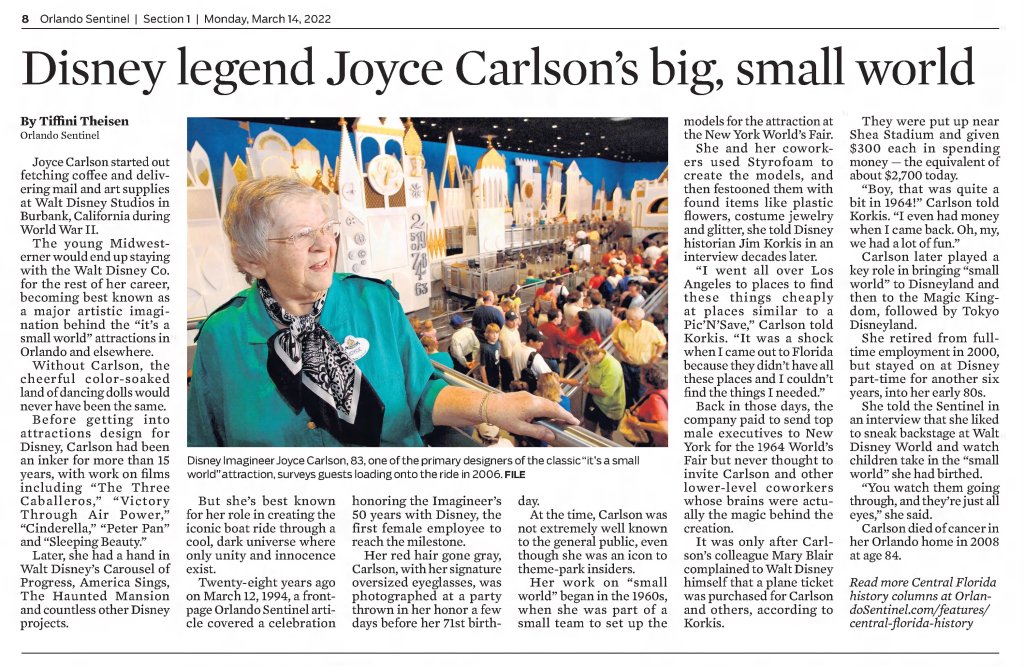
Top photo by Joe Penniston

 Tiffini Theisen
Leave a comment